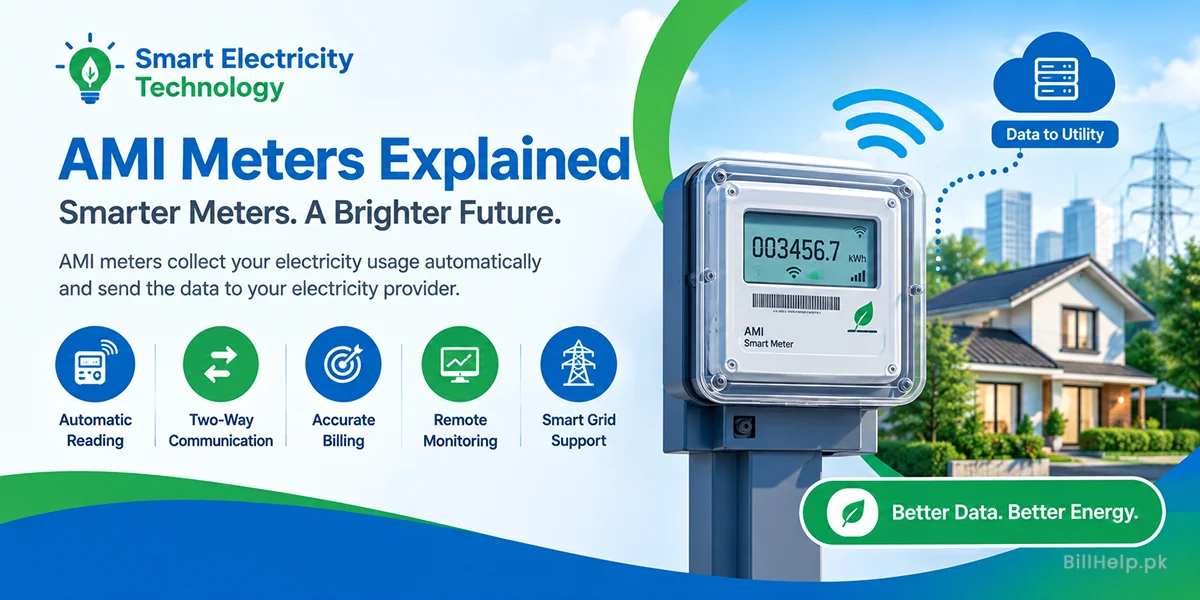
An AMI meter reads your electricity and sends that reading to the power company. A meter reader does not have to visit. The tariff on the bill does not change just because the meter is smart.
AMI in one minute
AMI means Advanced Metering Infrastructure. The meter records use, and a communication link carries that record to the company. The company can also send a request back, which is why the link is called two-way.
- Automatic readings, without a visit
- A two-way link, not a one-way counter
- The same tariff, with a more exact unit count
- Your reference number can change when the company moves you to an AMI billing batch
What an AMI meter is
AMI is the system, not only the box on the wall. The meter measures use. A network carries the reading. The company’s data system stores it and uses it for the bill.
An ordinary meter waits for someone to write the number down. An AMI meter sends the number itself. That is the whole practical difference for a household: fewer missed visits, and a bill based on the reading the meter actually sent.
It is not a solar green meter. A green meter, or net meter, counts units you take from the grid and units your panels send back. That is a different job, explained in the net metering and net billing guide and on the MEPCO green meter bill.
The four parts
Smart meter
Fitted at the premises. It measures the electricity you use.
Communication link
Carries the reading to the company, and can carry a request back to the meter.
Data collector
Gathers readings from many meters and passes them on.
Meter data system
Stores the readings the company uses to prepare the bill.
What happens to a reading
1. The meter measures use
It records the units, and it can also record voltage and current.
2. It keeps that record
The reading stays in the meter until the network picks it up. You can still compare it with the previous and present readings printed on the bill. The IESCO bill guide shows where those fields sit.
3. The network sends it
The reading goes to the company without a meter reader at the gate.
4. The company bills from it
The units on that reading, plus the charges already on your tariff, become the bill. After you pay, confirm it on the electricity paid-status check.
Old meter and AMI meter
| Traditional meter | AMI meter |
|---|---|
| A person reads it | The meter sends the reading |
| Information only comes out | The company can also send a request back |
| One total, taken on the visit | A finer record of use |
| The reader has to reach the meter | The company can see the reading remotely |
What changes for you, and what does not
For the consumer
- The bill uses a reading the meter sent, so a missed visit is less likely.
- An estimated bill is still possible if the meter itself is faulty. A defective meter is billed on an average until it is replaced.
- You can see use more clearly when the bill shows previous and present readings.
- A wrong bill is easier to question when the reading is on the record. Start at the electricity help centre.
For the company
- The network can be watched without waiting for the monthly round.
- A meter that stops, or a use pattern that does not match the connection, is easier to spot.
- Load can be managed with fresher numbers.
- Faults on the system show up sooner.
A smart meter does not cancel load shedding. The shutdown roster is separate. Check the IESCO schedule or the LESCO schedule for the hours in those cities.
The IESCO case people search for
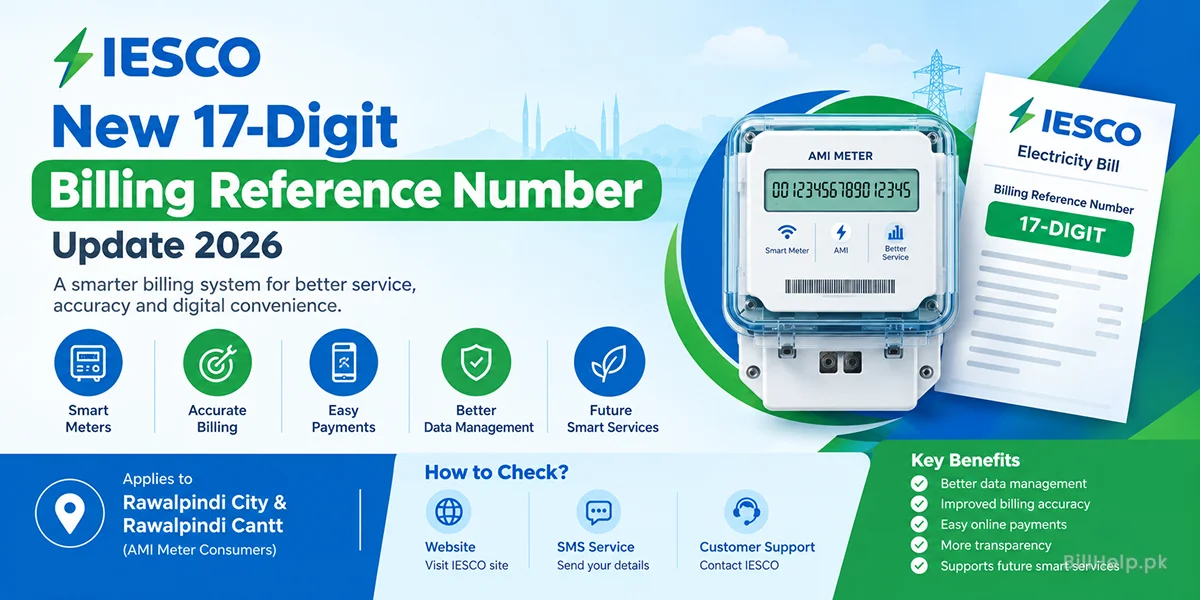
On 7 July 2026, IESCO reorganised billing batches for consumers who already had AMI meters in Rawalpindi City and Rawalpindi Cantt. Old batches 1 and 2 became batch 17. Batches 24 and 25 moved as well. The point of the change, in IESCO’s own notice, was timely and automatic meter reading.
The reference number is still 14 digits. “17” is the new batch, not a 17-digit reference. The notice did not announce a new tariff.
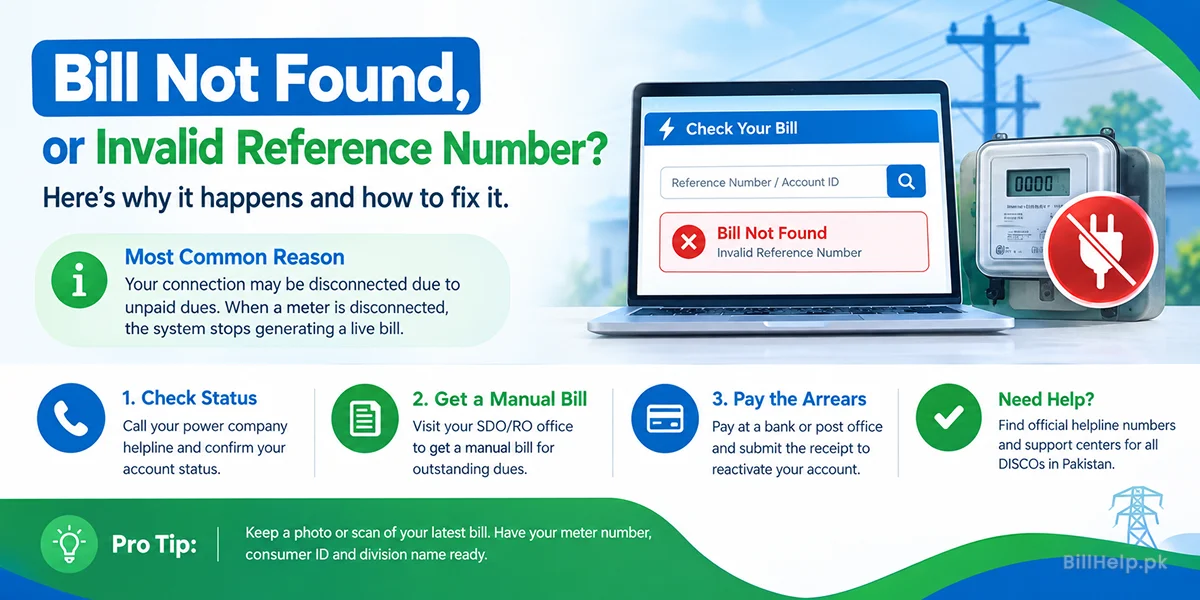
If your old number now returns “bill not found”, you are often holding the pre-change reference. Use the IESCO batch-change guide to get the current 14-digit number, then the bill-not-found checks if it still fails. A new meter also does not put the bill in your name. That is a separate name-change application.
Where AMI sits in the grid
The readings give the company a current picture of demand, faults, and where power is going. That is the smart-grid use. Your bill is still units times the tariff, plus the fixed charges your category already has. AMI does not replace those charges.
The company on the bill is still the one that charges you
Open the checker printed on your bill. An AMI reading does not move you to a different company.
Frequently asked questions
Official sources to check:NEPRA