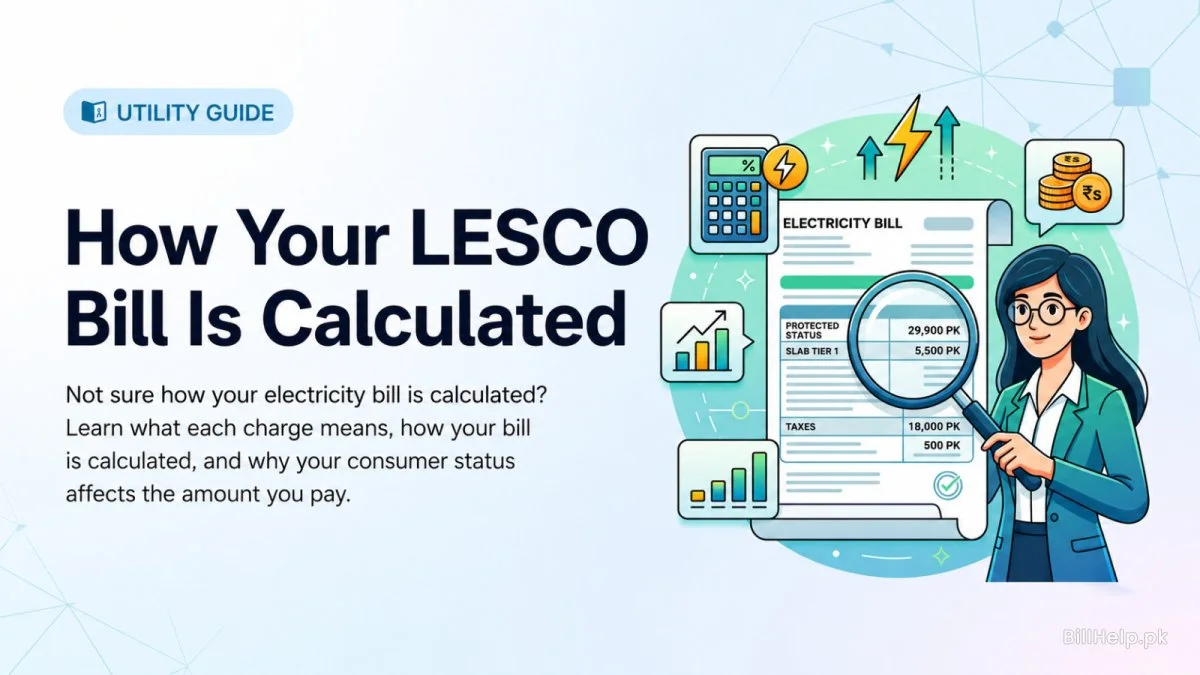
Have you noticed a dramatic surge in your domestic or commercial electricity bill total? Power tariff calculations can seem incredibly complicated to track. Let us explain exactly how LESCO calculates your bill so you can verify every charge on your statement.
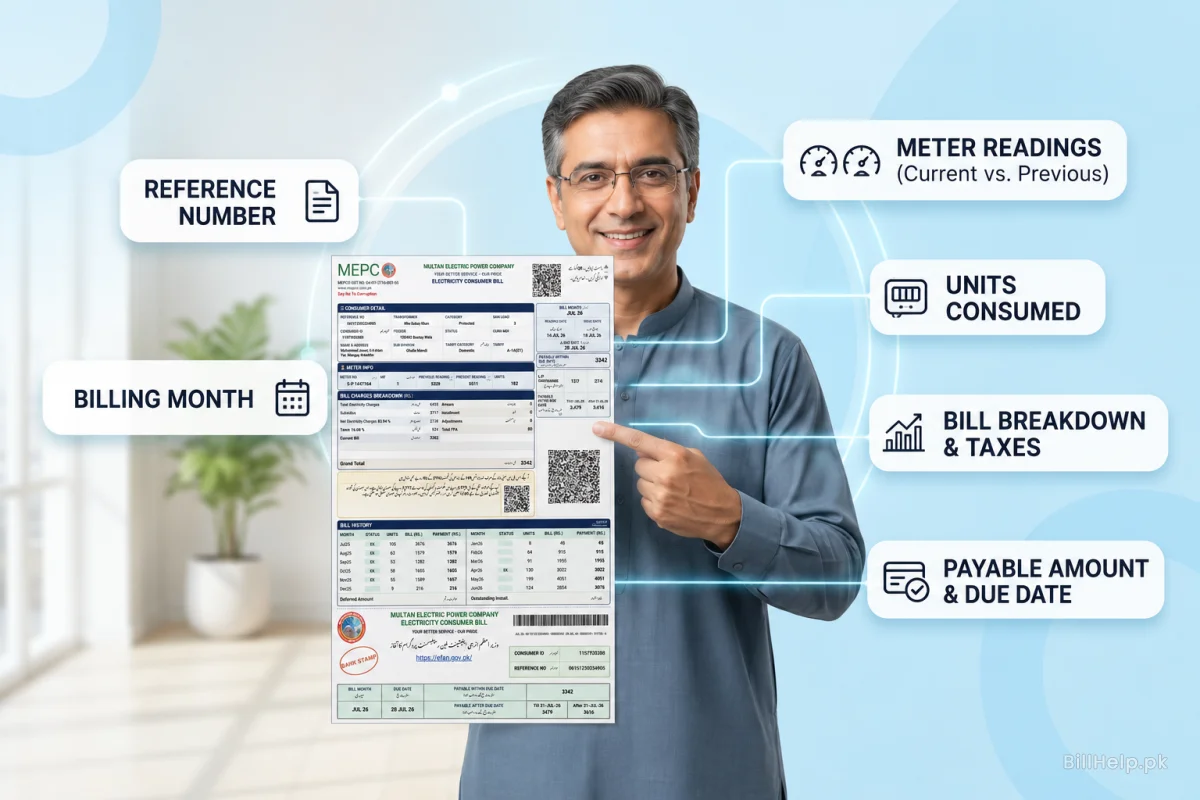
What does your bill look like?
Your total bill isn't just the cost of the electricity. It is built from three distinct layers: the base unit tariff slab, variable monthly fuel price variations, and a network of government taxes and surcharges.
Protected vs. Unprotected Consumers
To provide subsidies to low-income households, the Ministry of Energy divides all residential connections into two distinct legal classes based on their long-term power usage patterns:
Protected Status
To qualify, a domestic connection must consume under 200 units per month consistently for 6 consecutive months. Protected status provides a highly subsidized, low flat-rate tariff across all usage bands and exempts households from certain progressive tax brackets.
Unprotected Status
If your connection crosses the 200-unit threshold even once within a 6-month window, you lose protected status. The base tariff rate immediately scales up, and your usage is re-calculated under a higher premium tariff structure.
Multi-Tier Slab Calculation Logic
LESCO does not apply a flat rate for your entire power usage. Instead, it’s a progressive slab system. Say you use 350 units . Your bill is calculated across multiple tiers , rather than charging the max rate for all 350 units .
| Consumption Bracket | Slab Category | Pricing Structure Formula |
|---|---|---|
| 1 to 100 Units | Tier 1 Subsidized | Lowest base rate and largely insulated from fluctuations. |
| 101 to 200 Units | Tier 2 Subsidized | Moderate incremental changes applied. |
| 201 to 300 Units | Standard Unprotected | Level increases with rising cost measures. |
| 301 to 700+ Units | High Consumption Premium | Maximum tariff bracket with extensive progressive taxation. |
Peak vs. Off-Peak Hours Timing Schedule
If your property has a modern Time of Use (TOU) three-phase meter installed, your usage is split into two distinct time zones every 24 hours. Peak hours carry a higher unit rate due to city-wide demand.
Seasonal Peak Hours Matrix
Plan heavy energy use (like running ACs, water pumps, or electric irons) during off-peak windows to keep your monthly bill significantly lower.
Taxes & Surcharges Explained
Here is a breakdown of what those confusing tax acronyms on your billing sheet actually mean:
Accounts for variations in global oil, gas, and coal prices used by power generation companies. Calculated retroactively and added to your bill two months later.
A fixed fee added per unit to help cover debt service obligations within the national power sector grid.
Adjusted every three months by NEPRA to account for capacity purchase changes, transmission losses and operational updates across regional networks.