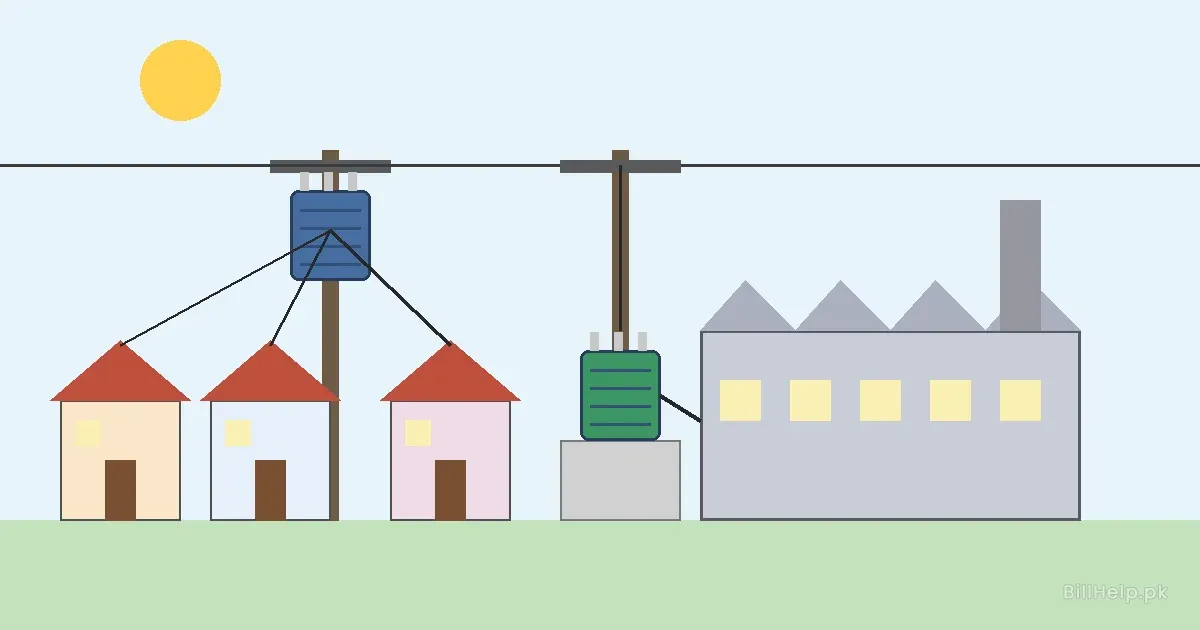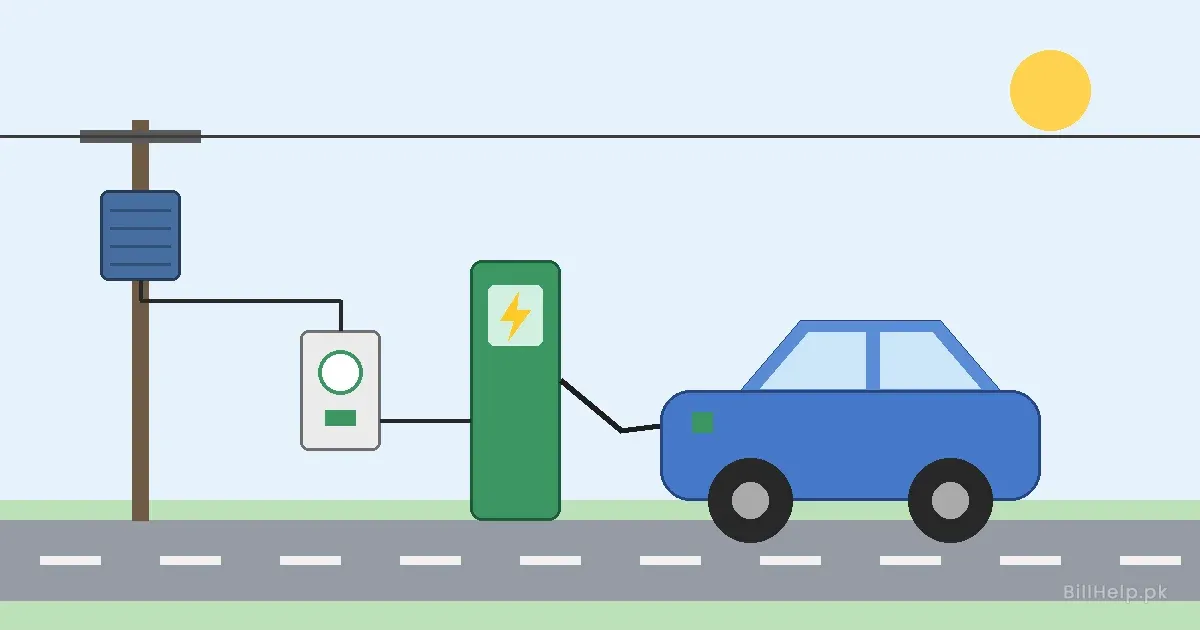
In GEPCO's paperwork, an EV charging station is not just a plug on a wall. It is a separate electricity connection, made only for charging electric cars, bikes or rickshaws. The same goes for a battery swapping station. GEPCO has published its own short procedure for these connections. It links three bodies: GEPCO, NEECA (the National Energy Efficiency and Conservation Authority) and NEPRA. This guide puts the steps in order, with the time each step should take, so you can plan a charger at a petrol pump, plaza, hotel or factory in Gujranwala, Sialkot, Gujrat or any other GEPCO district.
The short version: GEPCO NOC first, then NEECA registration, then an online application on the ENC portal, then the demand notice, then the meter. You cannot skip the order, because each step needs the paper from the step before.
Who can build one (no waiting time)
Under the NEECA EV Charging Infrastructure and Battery Swapping Regulations 2024, any individual, partnership, company or oil marketing company can set up a charging or swapping station. You must register with NEECA before you build. The regulations also split stations into two kinds:
- Private captive use: chargers for your own vehicles, such as a company fleet.
- Public use: anyone can drive in and pay to charge.
They also define charger levels. This helps you work out the load you will ask GEPCO for.
| Level | What it is | Power |
|---|---|---|
| Level 1 | Single-phase, normally overnight at home. No extra charging equipment needed. | Up to 3.3 kW |
| Level 2 | Three-phase AC charger | 3.3 kW to 22 kW |
| Level 3 | DC fast charger | Above 50 kW |
| Level 4 | DC fast charger | Above 150 kW |
| Level 5 | DC fast charger | Above 350 kW |
Only charging a car from a normal socket at home? That is Level 1, and the GEPCO procedure below is about station connections. Still, check that the sanctioned load on your home meter can carry the extra demand. Our load extension guide explains how the load rules work under NEPRA.
The GEPCO NOC (about 5 days)
Go to the GEPCO MIRAD office with your application. GEPCO says its online portal is still being linked with the NEECA portal, so for now this step is in person. Take these papers:
GEPCO's technical team then surveys the site. They check if the feeder can take the load, if the transformer has room, and other technical points. After that, GEPCO should issue the NOC within 5 days. The NOC stays valid for 90 days, and GEPCO also prepares a rough estimate of your demand notice. MIRAD officers' numbers are listed in the GEPCO telephone directory. GEPCO's head office is at 565/A Model Town, G.T. Road, Gujranwala.
NEECA registration (15 working days)
With the NOC in hand, apply on the NEECA EVCI & BSS registration portal. Do this well inside the 90 days. The form asks for the DISCO name, the nearest grid station and its distance, the charger type, level, number, power and guns, plus your NTN and GST details. You attach the DISCO NOC, other NOCs where needed (for example EPA or NHA), an authority letter and a site layout.
A committee with members from NEECA, the DISCO and the district administration works as a single window. It should decide within 15 working days. If something is missing, you get 15 working days to fix it, plus a 7-day extension. Before any rejection, you must be given a hearing.
| NEECA fee (Schedule-B) | Amount |
|---|---|
| Application fee, per station (non-refundable) | Rs 50,000 |
| Annual fee, Level 2 | Rs 35,000 |
| Annual fee, Level 3 | Rs 50,000 |
| Annual fee, Level 4 | Rs 65,000 |
| Annual fee, Level 5 | Rs 80,000 |
Fees as notified in S.R.O. 1646(I)/2024. NEECA can revise them, so check the portal before you pay.
ENC application and demand notice (6 to 20 days)
Once NEECA registers you, apply online on the ENC portal and upload the NEECA Registration Certificate. GEPCO then issues the demand notice within 6 to 20 days, depending on the load. The demand notice is valid for 30 days, so keep the money ready.
The NEPRA Consumer Service Manual treats a public charging station as a commercial consumer. For commercial (A-2) connections, the security deposit in Annexure IV is Rs 1,810 per kW in urban areas and Rs 920 per kW in rural areas. Your demand notice shows the exact amount. The manual also says there is no escalation cost for commercial connections up to 15 kW, and you can ask to pay the demand notice in installments without mark-up.
Connection and meter (30 to 106 days, by load)
After you pay in full, GEPCO must install the connection within the NEPRA time frame in Annexure III of the manual. The full time frame for each load band is:
- Up to 15 kW at 400 V: 30 days
- Above 15 kW up to 70 kW at 400 V: 44 days
- Above 70 kW up to 500 kW at 400 V: 58 days
- Above 500 kW up to 5,000 kW at 11 kV or 33 kV: 106 days
If GEPCO misses a deadline, the manual says it must give you the reason for each day of delay in writing, with a copy to NEPRA.
Already a GEPCO consumer? (plan for two connections)
This is the point most people miss. EV charging gets its own connection and its own metering.
| Your case | What GEPCO asks for |
|---|---|
| You already have a connection and want the A-2(d) EV tariff | A separate, second connection only for EV charging |
| New site with nothing installed yet | Two applications at the same premises: one for the charger or swapping station (the steps above) and one for lights, fans and other general use through the ENC portal |
The NEECA rules agree. EV charging needs its own metering setup, without auxiliary loads. The NEPRA manual also says each charger (EVSE) at a public station needs a separate connection, unless the DISCO allows otherwise. GEPCO's procedure calls the A-2(d) category "subsidized". The tariff schedule on GEPCO's website lists the EV charging station line without a fixed charge. To estimate the bill on your regular, non-EV meter, use our GEPCO-area bill calculator for your general connection.
Running a public station (every day after opening)
Registration comes with duties. A public station must:
- Run 24/7 with more than 90% uptime.
- Be visible on a website or mobile app, with an active internet link.
- Not charge EV users more than NEPRA's maximum margin per unit, and display the margin where users can see it. GEPCO must report overcharging to NEPRA.
- Keep records for three years and allow a yearly NEECA inspection.
The manual's safety rules matter when you design the site. Sockets must be at least 800 mm above the ground. No extension cords or second supply leads are allowed. Outdoor or damp points need at least IPX4 protection. The car's charging port must be within five metres of the charging point when parked. Danger and caution signs must be in Urdu or English and readable from 5 feet. NEECA's rules also ban portable socket-outlets and adaptors. If you ask, GEPCO must give you its EVSE installation requirements free of cost within seven working days.
Breaking NEECA's rules is costly: Rs 100,000 for a first violation, Rs 500,000 for a second, and the registration can be revoked on a third.
Five short answers
- Can I apply for the GEPCO NOC online?
Not yet. GEPCO says its portal link with NEECA is still in progress, so visit the MIRAD office. - How long does the GEPCO NOC stay valid?
90 days. Register with NEECA before it expires. - Can my shop meter also run the charger?
Not for the EV tariff. GEPCO asks existing consumers for a separate connection only for EV charging. - What does NEECA charge?
A Rs 50,000 application fee per station, then an annual fee from Rs 35,000 (Level 2) to Rs 80,000 (Level 5). - Does GEPCO's process cover battery swapping stations?
Yes. The same GEPCO procedure covers both charging and battery swapping stations.
Sources: GEPCO procedure for an EV charging station or battery swapping station connection; NEPRA Consumer Service Manual 2025 (GEPCO copy), chapter 16, clause 2.4, Annexures III and IV; NEECA EV Charging Infrastructure and Battery Swapping Regulations 2024, S.R.O. 1646(I)/2024; tariff schedule on gepco.com.pk.