Your LESCO bill is a map, not a puzzle. Every line has a name and a job. Learn the names once, and you can check any month's bill in a few minutes — even when the layout changes.
The meanings below come from NEPRA's Consumer Service Manual (what every electricity bill should contain) and from LESCO's own FAQs. Open your latest bill on our LESCO bill check page and follow along.
Four words to know first
Reference No.
Your connection's ID. You need it to check and pay the bill.
Reading date
The day LESCO took this month's meter reading.
Units consumed
Energy used in the billing period — or an average if the meter is defective.
Due date
Last day to pay the "within due date" amount. Holiday moves it to the next working day.
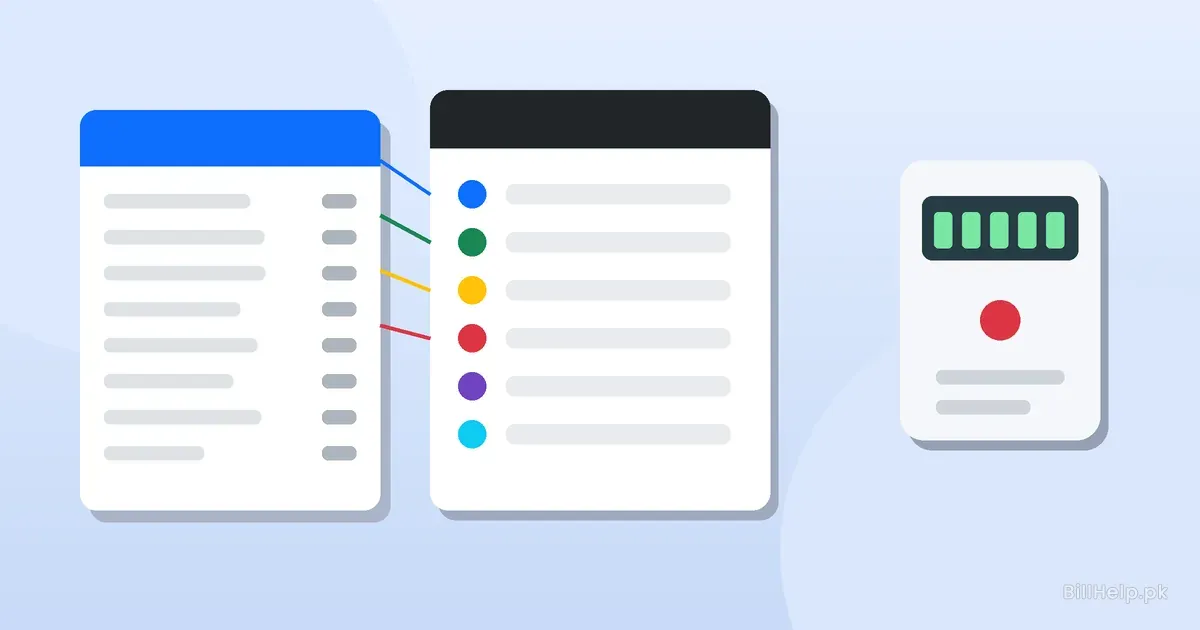
Field map: what each line means
Find the name of the field on your bill. Box positions can change when bills are redesigned.
| On the bill | What it means |
|---|---|
| Billing month | The month the bill is for. |
| Name and address | The consumer name and the address of the connection. |
| Reference No. | A dedicated number allotted to your connection for identification. |
| Tariff | Your category (for example residential or commercial) and the NEPRA-approved rates that apply. |
| Load | The sanctioned load of your connection. |
| Meter No. | Identifies your billing meter. For net metering, the bill also covers imported and exported energy. |
| Date of connection | The date the meter was installed. |
| Reading date | The date the meter reading was taken. |
| Issue date | The date the bill was issued to you. |
| Due date | The date by which the amount is to be paid. If it falls on a holiday, it becomes the next working day. |
| Present meter reading | The reading taken on this month's reading date. |
| Previous meter reading | The reading taken on the previous month's reading date. |
| Exported / imported units | Shown for net metering (green meter) connections: energy sent to the grid and energy taken from the grid. |
| Snapshot | A photo of the present meter reading. For net metering it should cover peak, off-peak and export. After a meter change (MCO), the final reading of the old meter is also printed. |
| Total units consumed | Units used in the billing period, or average consumption if the meter is defective. |
| Billing history | Twelve months of bills and payments. |
| Total cost of electricity | Cost of the units at your tariff (or of average units if the meter is defective). |
| Fixed / variable charges | As defined in the tariff terms and conditions. |
| Billing demand / MDI | Maximum demand related items used in some tariffs. MDI means Maximum Demand Indicator — the highest demand recorded in the period. |
| GST | General Sales Tax levied by the Government of Pakistan. |
| ED | Electricity Duty levied by the provincial government. |
| Other charges | Items such as Fuel Price Adjustment (FPA), Quarterly Tariff Adjustment (QTA), Financing Cost surcharge, Annual Distribution Margin Component (ADMC), PTV fee, withholding tax, and other federal charges or surcharges. |
| Installments | Any amount due under installments allowed by the competent officer. |
| Deferred amount | An amount the company has deferred. |
| Arrears | Unpaid amount from earlier bills. |
| Amount payable within due date | Total of current items, including arrears if any. |
| Late Payment Surcharge (LPS) | Extra amount if you pay after the due date. |
| Amount payable after due date | Within-due-date total plus LPS. |
| Payment of bills | Banks and other places where you can pay. |
| Other particulars | Division, sub-division, feeder, complaint contacts, XEN/SDO numbers, and office addresses including NEPRA and the Electric Inspector. |
Definitions: NEPRA Consumer Service Manual, clause 6.4.1 (bill contents). NEPRA says this information must also appear in Urdu on the bill.
Three lines people often misread
Quick sense-check before you pay
- Does the name, address and tariff look right?
- Does the present reading match the meter (and the snapshot)?
- Do the units look normal next to your 12-month history?
- Are there arrears you already paid? LESCO's FAQ says wrongly added arrears can be corrected if you show the previous bill's bank receipt.
- Note the due date. NEPRA says the due date is within 15 days of the issue date, and you should still get a clear seven days from actual delivery of the bill.
Something still looks wrong? Our wrong bill and overbilling guide shows the correction path.
Short answers
What is MDI on a LESCO bill?
MDI stands for Maximum Demand Indicator. It relates to the highest demand recorded for your connection in the billing period. It matters most on tariffs that use billing demand or MDI in their charges.
Why does my bill show a snapshot of the meter?
NEPRA makes a meter-reading snapshot mandatory for all consumer categories. It is printed on the bill. For net metering it should include peak, off-peak and export. LESCO must keep snapshots for twelve months for dispute settlement.
What does DEF EST mean?
LESCO's FAQ says DEF EST means the meter is defective and the bill is estimated from the same months last year. Ask your sub-division if replacement is delayed.
Where are taxes explained in more detail?
This guide only maps the line names. For GST, ED, FPA, QTA and other items, see our LESCO taxes post.
Sources: NEPRA revised Consumer Service Manual sent to all distribution companies on 26 November 2025, clause 6.4.1 (bill contents), clause 6.1.3 (mandatory snapshots), and due-date rules under time period for payment of bills; LESCO FAQs on DEF EST and bill readings (lesco.gov.pk, via prior verified copies). Last checked: 16 Oct 2026.